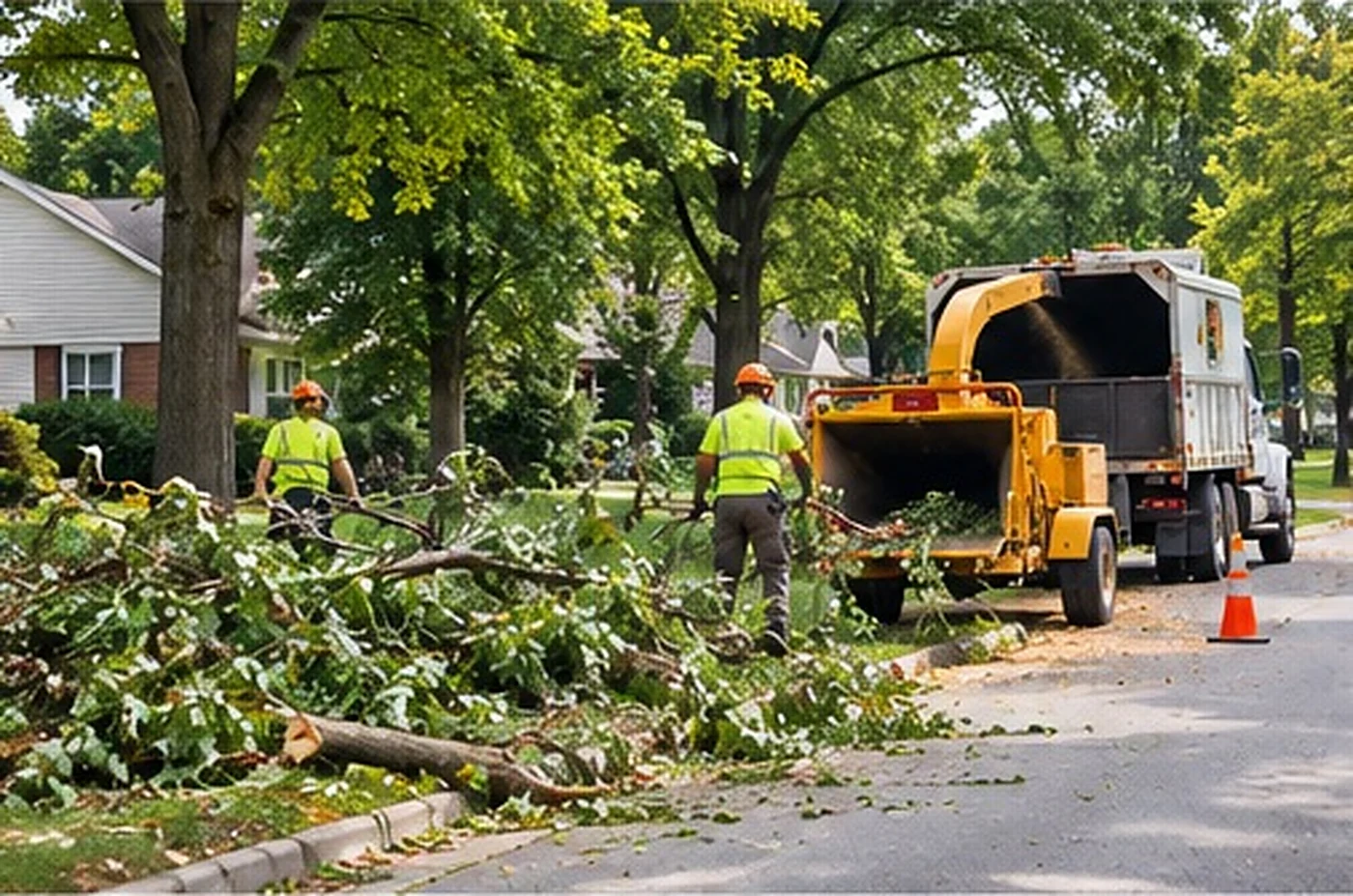
Storm Damage Tree Cleanup in Akron, OH
After a storm the tree is either standing damaged or already down, and the two are priced differently.
Central Ohio storm damage usually arrives in two shapes: summer thunderstorm wind that snaps limbs, and a wet snow or ice event that loads a leafed-out crown until it fails. A tree still standing with a split trunk is a removal. A tree already down in a yard is a cleanup. This page covers what each involves, what to check before you hire, and where the insurer fits.
A tree that is still standing with a split crotch, a torn limb or a root plate lifted out of the ground is the more dangerous of the two. The rigging has to hold load that is still attached, and a leaning trunk on a lifted plate can move without warning. These are quoted as removals, at the top of the range and often with a crane.
A tree already down and clear of structures is mostly handling: bucking, chipping, hauling the rounds. It is priced on volume and access, and it is the cheaper call of the two.
Most homeowner policies pay to remove a tree that has fallen on a covered structure and to remove debris that blocks access, and many cover removal of a tree that damaged the property. Routine cleanup of a tree that fell in an open yard is often excluded or capped.
Photograph everything before it moves, keep the crew's itemized invoice, and ask the adjuster what the removal sublimit is. Removal limits are commonly lower than the structural coverage and very commonly lower than people assume.
A wet snow or an ice storm on a tree still holding leaves is the classic failure: the crown carries far more weight than the branch unions were built for. Silver maple and Siberian elm fail at weak crotches, honey locust drops long horizontal limbs, and ash killed by emerald ash borer is brittle enough to snap at the base.
That is why cleanup after a storm turns into a hazard survey. A dead ash on a lot that lost limbs in the last event is the next call.
Usually when a tree hits a covered structure or blocks access, and often with a separate removal limit that is lower than the structural coverage. Cleanup of a tree that fell in an open yard is commonly excluded. Photograph the damage before anything moves and ask the adjuster for the removal sublimit.
It depends on whether the tree is still standing. Standing damage is quoted as a removal in the $400 to $1,200 published range and above; material already on the ground is priced by volume and access and usually costs less.
Yes if the root plate has lifted or the trunk has split. A tree leaning over a house, a driveway or a play area should be assessed the same day, not left until the next storm finishes the job.
Yes, and it saves money. Ask for the rounds bucked to length and stacked clear of the stump hole, and confirm the brush is still chipped and removed.