Land Clearing in Akron, OH
Clearing a lot is a sequence, and the price follows the sequence.
Clearing land is not one job. It is a survey of what is on the lot, a decision about which trees stay, the work of taking the rest down, stump and root removal, and what happens to the material. Most overruns come from a plan that skipped the marking stage. This page covers the sequence and the questions to settle before a machine arrives.
The cheap stage of clearing is the marking stage. Walk the lot with the crew and paint every tree that stays: the specimen oaks, the shade over the future patio, the line that screens the neighbor. A cleared lot cannot be re-planted at the cost of the trees that were felled.
If a survey, a site plan or a septic design exists, the clearing plan should sit on top of it. Taking a tree out of a future building envelope is different from clearing a fence line.
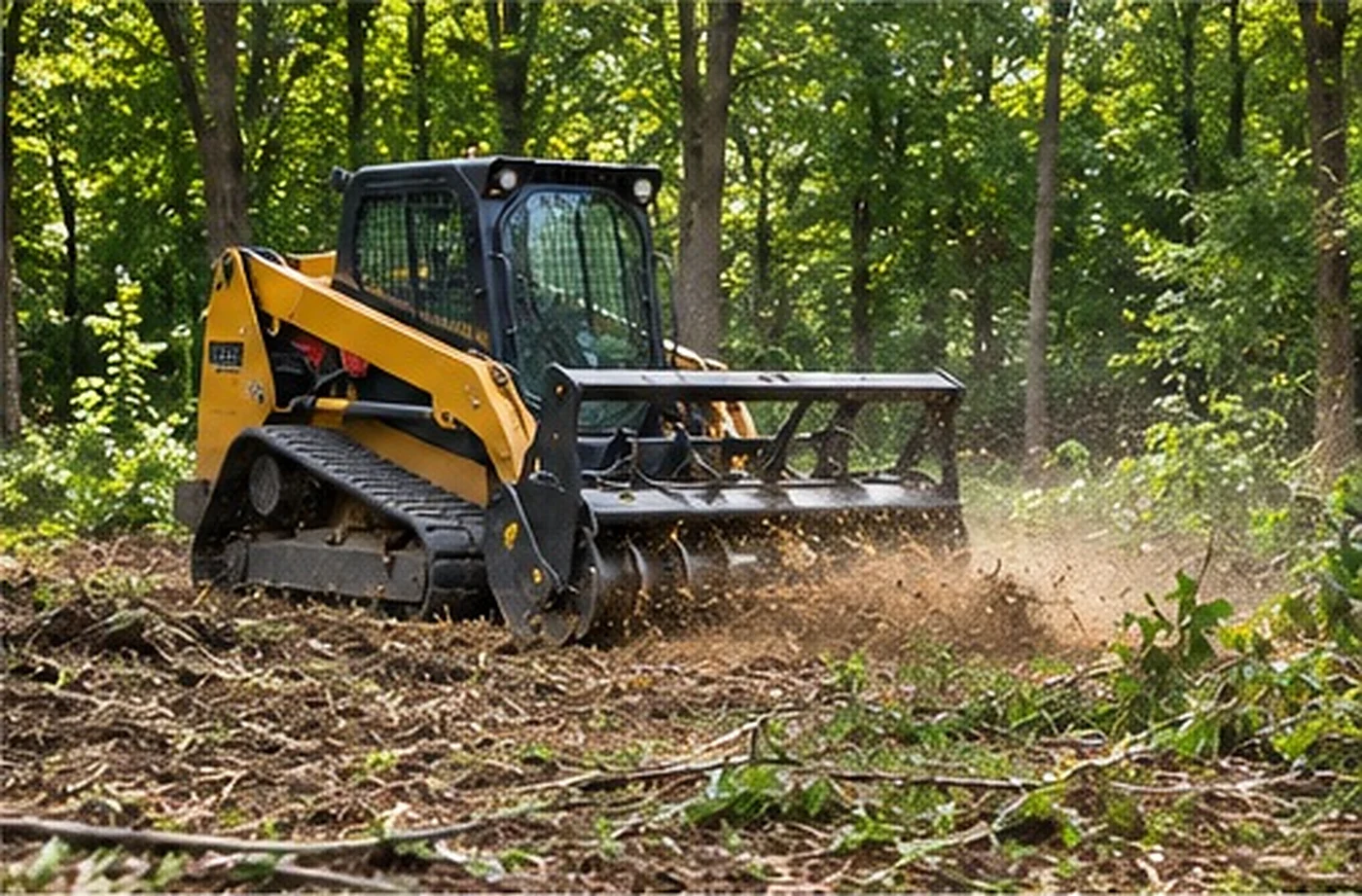
Brush and saplings are mown with a forestry mulcher or cut by hand, and the cost is driven by density and by what the machine can reach. Mature timber has to be felled, worked down and hauled, and the hauling is often the largest single line because a mature tree is a lot of weight.
Ask how the material leaves: chipped on site, mulched into the topsoil, burned under a permit, or loaded out. Each has a different cost and a different effect on the finished grade.
Stumps are ground or pulled, and roots in a driveway or a foundation footprint have to be removed rather than ground, or the soil settles under the new slab. In Summit County clay the hole left by a pulled stump holds water, so backfill and compaction decide whether the spot becomes a basin.
Grading is the last step and often the one that was not quoted. Settle which way the lot drains after clearing before the machines leave.
Clearing is only about the trees on the private lot; a public tree along the road belongs to the city and is reported through 311. Where a building permit is in scope, the erosion and sediment control plan and the tree protection requirements come with it.
Any excavation, including root removal below grade, requires an Ohio 811 locate through the Ohio Utilities Protection Service. Private lines are the owner's to flag.
It is quoted per lot, not per tree, because density, access, tree size and hauling all move together. Published removal ranges of $400 to $1,200 per mature tree and $100 to $500 or more per stump are the building blocks a clearing estimate is assembled from.
On private property, usually yes for the trees themselves. Public trees along a street belong to the city and are reported through 311. Where a building permit is involved, the erosion control and tree protection requirements come with it.
Ask before work starts: chipped on site, mulched into the topsoil, burned under permit, or loaded out. Hauling mature timber is often the largest line in a clearing estimate.
Only where nothing will be built. Under a driveway, a slab or a foundation the roots have to come out, or the soil settles and the new surface fails.